
The Missing Link Between Expression and Control in Classical Guitar
One of the most common traps in classical guitar is this:
You feel the music deeply.
You know how you want it to sound.
You already have ideas about phrasing, colour, and expression.
But when you play, something still feels slightly unstable.
The rhythm wavers.
A shift feels uncertain.
A fingering isn’t fully settled.
And in performance, the whole thing can feel less secure than it did in the practice room.
That doesn’t mean you’re unmusical.
In fact, it often means the opposite.
Very expressive players often hear the music so vividly that they want to jump straight into interpretation before the foundations are completely settled.
And that’s where the real work begins.
Expression Is Not the Enemy
Recently, I was working with a guitarist who had exactly this quality.
Straight away, you could hear musical feeling in his playing. There was heart, instinct, and a genuine desire to communicate something beautiful. That is not something to suppress.
But there was also a clear next step: the expression needed to be supported by more rhythmic discipline and clearer physical mapping on the instrument.
This is such an important point.
The solution is not to become cold, rigid, or mechanical.
The solution is to blend expression with control.
That is when playing starts to feel truly convincing.
Rhythm Is the Glue
If I had to identify one issue that affects more guitarists than almost anything else, it would be rhythm.
Not because people cannot count.
But because rhythm is often not fully internalised.
Many players are trying to express the music before they have fully embodied the pulse. As a result, the piece can sound persuasive in moments, but not yet fully grounded.
Rhythm is the glue that holds everything together.
When the pulse is clear and the proportions of the rhythms are understood, suddenly everything starts to settle:
phrasing becomes more convincing
memory becomes more reliable
technical choices become clearer
performance becomes more secure
Without that rhythmic control, even beautiful ideas can feel fragile.
A Simple Way to Internalise Rhythm
One of the most helpful tools I use is what I call time words.
Instead of treating rhythm as an abstract counting exercise, I like to connect each rhythm to a spoken sound or word.
For example:
quavers can become a simple repeated sound
triplets can have their own spoken identity
crotchets can have a different one again
Why does this help?
Because when you can say the rhythm, you begin to feel it.
You are no longer just reading notation on the page. You are internalising proportion.
Rhythm is really about proportion:
how many notes fit into the beat
how they relate to one another
where the pulse sits underneath everything
Once that becomes clear, rhythm stops feeling like a burden and starts feeling like something you know instinctively.
Sometimes the Problem Is Not Musical — It’s Positional
Another common issue is that a player may actually understand the music quite well, but still feel insecure because the physical map is not fully settled.
A shift is only half decided.
A fingering works, but hasn’t been fully committed to.
A position change is possible, but not yet clear enough to trust under pressure.
This matters more than many players realise.
When the left hand is uncertain, the mind gets pulled away from the music and into last-second decision making.
That is when the feeling of control disappears.
Often, a huge improvement comes not from practising more, but from clarifying:
which position you are in
where the shift happens
which finger you are committing to
what needs to be written into the score
That kind of clarity frees the musical mind.
Don’t Run Before You Can Walk
A thoughtful player once put it beautifully: there is always a temptation to “run before you can walk.”
That is exactly right.
If a piece is technically manageable, many players rush into expression before the rhythmic and physical foundations are truly stable.
But the answer is not to stop being expressive.
It is to refine the expression.
You keep the heart.
You keep the musical instinct.
You keep the poetry.
But you support it with:
discipline
structure
rhythmic clarity
technical certainty
Then expression stops being hopeful and becomes intentional.
Control Creates Freedom
This is one of the great paradoxes of music-making:
The more disciplined your preparation is, the freer your playing becomes.
When rhythm is internalised and positions are clear, you no longer have to fight for survival in performance.
Instead, you can actually communicate.
You can shape phrases with confidence.
You can trust your memory more.
You can take expressive risks because the structure underneath is strong enough to support them.
That is the blend every serious player is aiming for:
control and passion working together.
A Better Way to Practise
So what should you do if a piece feels expressive but not fully secure?
Go back and strengthen the foundations.
Try this:
1. Isolate the rhythm
Take a small section and speak the rhythm before playing it.
2. Make the pulse more disciplined
Let it feel a little stricter than performance for a while.
3. Clarify positions and fingerings
Be absolutely sure where each shift happens and what fingering you are choosing.
4. Write important decisions into the score
Do not leave critical movements to memory alone.
5. Rebuild the passage with control
Then return to expression once the foundation feels solid.
This is not going backwards.
It is actually the fastest way forwards.
Why This Matters for Performance
Performance has a way of revealing the truth.
When you play for others, weak spots show themselves:
memory slips
rhythmic instability
unclear fingering choices
places where the interpretation is ahead of the preparation
That is not failure.
That is feedback.
And when you respond to that feedback well, performance becomes one of the most powerful tools for growth.
In fact, many players only begin to enjoy performing once they have built this kind of control underneath their expression.
Then performance becomes less about fear and more about communication.
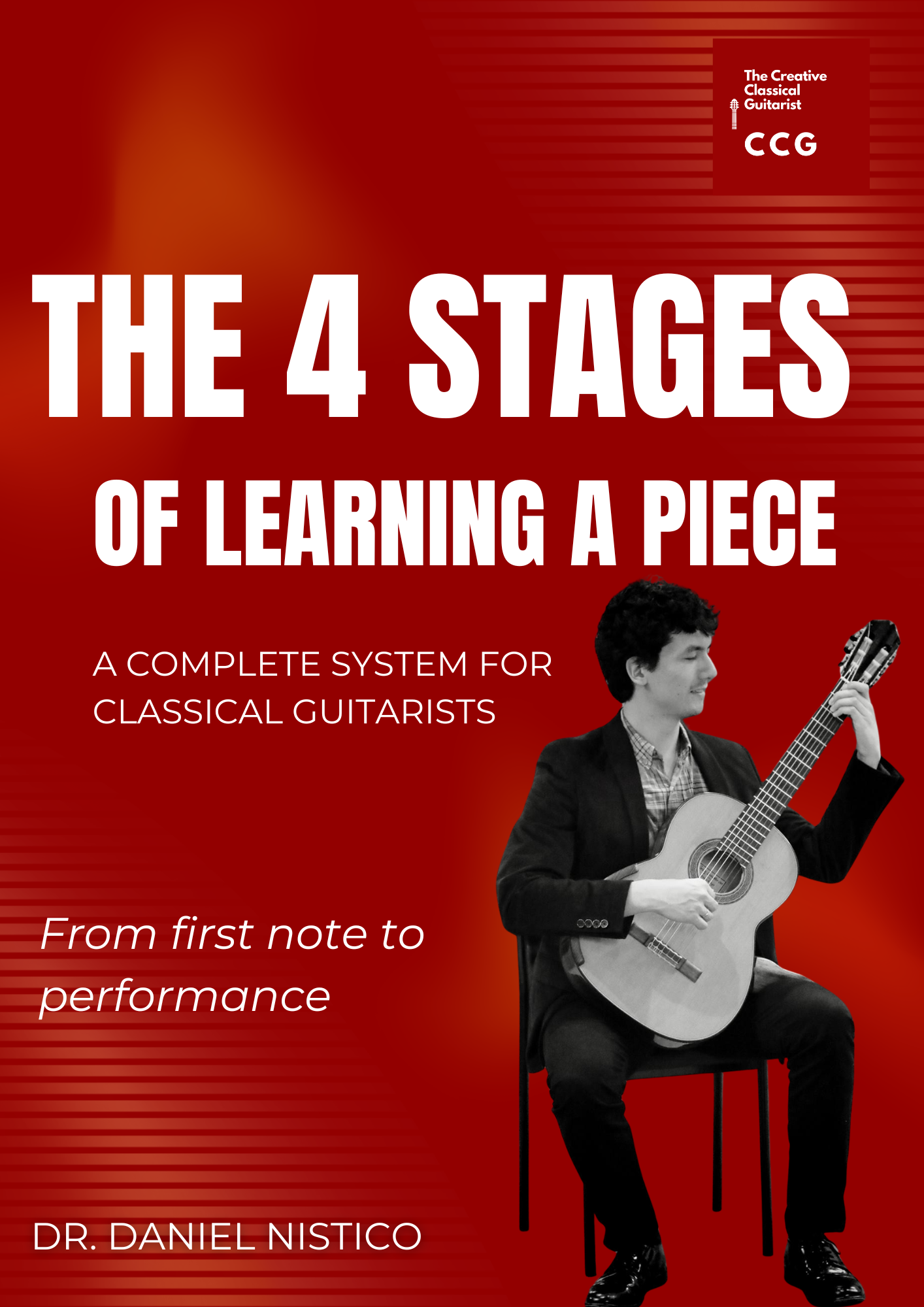
If this resonates with you, I put together a free guide called The 4 Stages of Learning a Piece.
It lays out a clear process for moving from first contact with a piece through to memorisation and performance, so you know what to focus on at each stage instead of guessing.