From Inspiration to Structure: A Practical Guide to Composing with Purpose
Many composers begin the same way: with a strong musical feeling, a striking sonority, a bass line, or a fragment that seems full of meaning. The challenge is not usually how to begin. The challenge is how to develop that inspiration into a complete, coherent piece.
That is where craft comes in.
A good way to put it is this: inspiration gives you material, but craftsmanship turns material into music. If you have a bass line, a melodic gesture, a mood, and a sense of character, you already have enough to begin. The next step is learning how to shape it.
1. Start with a clear musical idea
A piece often begins with something simple:
a bass line
a rhythm
a harmonic colour
a melodic fragment
a texture
a mood
In the lesson, the opening idea had a mournful, weighty character. That alone is already valuable. Not every beginning needs to be busy or dramatic. Sometimes a slow, serious opening is exactly right.
The key is to ask:
What is the emotional world of this opening?
What kind of piece does it suggest?
What story, atmosphere, or spiritual meaning could it carry?
Before worrying about complexity, make sure the opening idea has a clear identity.
2. Think of music as language
One of the most helpful ways to think about composing is to treat music as a language.
When you listen deeply to Bach, Mozart, Brahms, Beethoven, or other great composers, their sounds begin to live in your imagination. You start to “think in music.” Melodies, textures, and gestures begin to arise inwardly, almost like phrases in speech.
But just as with spoken language, inspiration alone is not enough. You also need vocabulary and grammar.
In music, that vocabulary includes:
chord progressions
bass motions
phrase structures
textures
cadences
modulations
imitation and counterpoint
orchestration
The more musical vocabulary you know, the easier it becomes to express the story you want to tell.
3. Ask: what is the story of the piece?
Before developing material too far, ask a central question:
What story is this piece trying to tell?
That does not mean you need a detailed program for every measure. But you do need some sense of direction.
For example:
Is the music introducing grief, solemnity, or awe?
Is it building toward intensity?
Is it reflecting on death, hope, resurrection, longing, order, struggle, or peace?
Is the music meant to transform from darkness toward light?
This matters because story affects musical decisions.
A descending bass line may suggest sinking, grief, or inevitability.
An ascending bass line may suggest striving, rising, hope, or transcendence.
A static bass may suggest stillness, weight, or ritual.
A moving bass may suggest development, urgency, or transition.
The point is not to force symbolism into everything, but to compose intentionally.
4. Move from improvisation to planning
Improvisation is often the birthplace of ideas. But once a good idea appears, it helps to step back and make a rough plan.
Even a very general structural outline can be enough.
For example:
Intro
A section
B section
Return of A
This is a very practical way to move forward. If you do not yet know every detail, you can still sketch the broad shape.
A simple approach might be:
Intro: establish the atmosphere
A section: present the main material
B section: contrast, development, modulation, or new theme
A return: bring back earlier material, perhaps transformed
This kind of map prevents the piece from feeling directionless.
5. Use 4-bar and 8-bar thinking
One of the most practical compositional tools is to think in 4-bar and 8-bar groups.
This does not mean every piece must be rigidly symmetrical, but these groupings give clarity and momentum. They help you know where you are and what should happen next.
If your intro is 7 bars long, for example, you may find that it feels slightly unsettled structurally. Adding one more bar to create an 8-bar introduction can immediately make the opening feel more complete.
Try asking:
Is this idea a 4-bar block?
Should this become an 8-bar phrase?
Does this section need one more bar for balance?
Thinking in blocks helps you avoid getting lost.
6. Don’t just repeat — transform
A repeated bass line or rhythmic idea can be very powerful, but great music usually involves transformation, not mere duplication.
You can transform an idea by changing:
rhythm
spacing
register
harmony
instrumentation
texture
voicing
accompaniment pattern
intensity
For instance, a bass line may begin in one form and later return:
in a different register
with altered rhythm
more harmonically charged
passed to another instrument
surrounded by imitation in upper voices
This is one of the great lessons from Baroque, Classical, and Romantic music: ideas grow by being reshaped.
7. Explore texture deliberately
Composers often think first of melody and harmony, but texture is just as important.
When writing for several voices or instruments, ask what kind of texture you want at each point. Some main options include:
Imitation
One part presents an idea, then another part answers or echoes it.
This can create continuity, seriousness, and contrapuntal richness.
Melody with accompaniment
One line carries the main thought while the others support it.
This often creates clarity and directness.
Homophonic or chordal texture
All parts move together rhythmically, creating a strong harmonic block.
This can sound solemn, unified, and powerful.
A piece becomes more engaging when its textures evolve over time.
8. Let harmony guide the next step
If you are unsure how to continue, look at your bass line and implied harmony.
For example, if your opening suggests:
i (A minor)
VI (F major)
then you already have harmonic grounding. That is not random. It gives the music a harmonic identity.
The next practical question becomes:
Do I keep the same harmonic progression?
Do I vary the rhythm while keeping similar harmony?
Do I introduce IV or V?
Do I create a new 4-bar block using a different progression?
This is where harmony stops being abstract theory and becomes a composing tool.
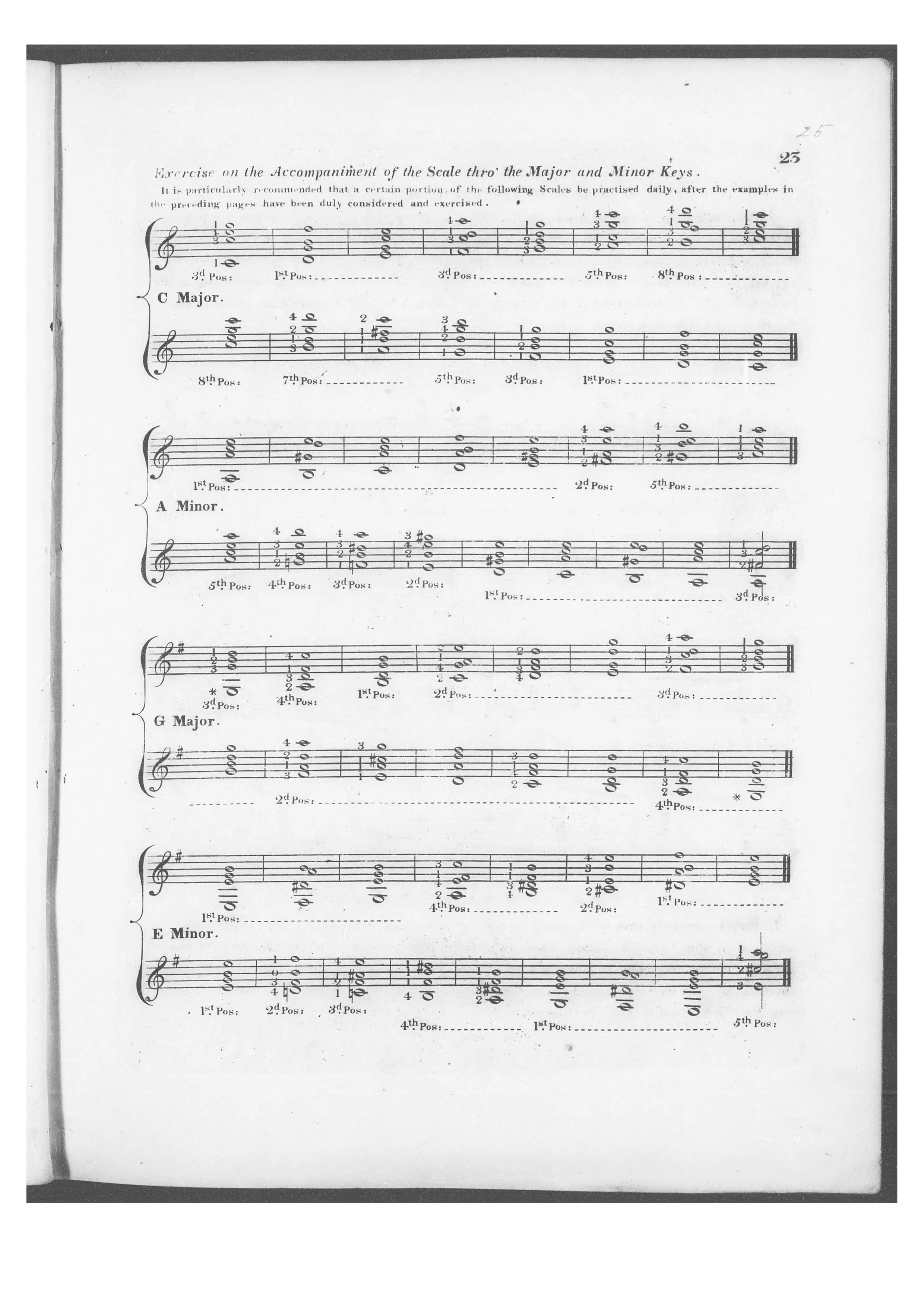
9. Use the rule of the octave as a composing tool
A very practical historical tool is the rule of the octave.
At its simplest, the rule of the octave gives you a way of harmonizing scale degrees smoothly and idiomatically. It is not just a list of block triads. It teaches how bass motion and harmony work together in a more fluent way.
This makes it useful in at least two ways:
1. Harmonizing a bass line
If you already have a bass line, the rule of the octave helps you find fitting harmonies.
2. Generating progressions
You can take short segments from the rule of the octave and use them as harmonic material for a new passage.
For example, if your first block is harmonically static, your next block could use a short ascending or descending sequence derived from the rule of the octave. That gives immediate motion and contrast.
This is especially useful when inspiration has given you a mood, but not yet a clear continuation.
10. Expand your harmonic vocabulary
A major obstacle for many composers is not lack of imagination, but lack of harmonic vocabulary.
You may know what kind of story you want to tell, but not yet know which chords, progressions, or bass patterns will express it.
That is why practicing harmony matters.
A very practical routine is to:
play rule-of-the-octave patterns in different keys
identify the chords
notice how they sound and connect
try them on your instrument and at the keyboard
reuse short segments in your own pieces
This is not separate from composing. It is part of learning how to compose.
11. Use historical progressions as models
If you want your music to sound more grounded in older styles, study and borrow from common historical progressions.
Examples include:
descending bass patterns
passacaglia-like ostinatos
sequences
cadential formulas
typical Baroque minor-key progressions
A repeating descending bass can create gravity and inevitability. A simple pattern can carry great expressive force if treated well.
You do not need to copy a whole piece. Sometimes a fragment of a progression is enough to unlock the next section.
12. Change key before the music becomes stale
One sign of mature composition is knowing when to move away from the home key.
If a passage remains in one key too long without enough harmonic variety, it can become predictable. Even in a serious, restrained piece, some shift of tonal focus is usually helpful.
For a piece in A minor, possibilities might include:
C major
E minor or E major implications
other closely related areas
another minor region if you want to preserve darkness
A simple way to think about it is:
first, establish the home key
then explore within it
then move away at the right moment
later, return with purpose
The question is not only where to modulate, but also when, why, and for how long.
13. Save ideas for later
Not every good idea should appear immediately.
Sometimes it is better to hold something back and introduce it later when it will have more power.
For example:
a close imitation passage
a more active version of the bass idea
a favourite rhythmic figure
a climactic orchestration
a thematic transformation
This creates growth. It lets the piece breathe and unfold.
A good piece often gives the listener the feeling that things are being revealed at the right time.
14. Compose by experimenting, not by waiting for certainty
A common mistake is waiting until everything is perfectly understood before writing more.
In practice, composition often works like this:
you try something
you listen
you assess whether it fits
you keep, alter, or discard it
you learn through the process
That is not failure. That is composing.
It is completely normal to write something, hear that it only partly works, and then revise it. In fact, that is often how the best solutions emerge.
15. Treat composing as both art and training
Every real composition is both:
an artistic act
a learning process
Even advanced composers are still learning. They are exploring new problems, new sounds, new balances, and new ways of shaping material.
So when you compose, it helps to hold both attitudes together:
serious artistic intention
humble willingness to learn through doing
This keeps you from becoming either careless or paralysed.
A practical workflow for continuing a piece
Here is a simple step-by-step process you can use right away:
Step 1: Define the character
Write one sentence describing the atmosphere of the opening.
Example:
“Mournful, weighty, serious, and slowly unfolding.”
Step 2: Identify your core material
List what you already have:
bass line
rhythmic pattern
melodic gesture
texture
key
Step 3: Build in 4-bar or 8-bar units
Ask:
Is my intro 4 or 8 bars?
Can I complete the opening block clearly?
Step 4: Label a rough form
For example:
Intro
A
B
A
Step 5: Decide how the next block contrasts
Choose one:
new harmony
new rhythm
new texture
new register
new key area
imitation
thicker orchestration
Step 6: Try one harmonic experiment
Use one of these:
IV–V motion
a descending bass line
a short rule-of-the-octave segment
a passacaglia-like pattern
an ascending bass line for contrast
Step 7: Listen and revise
Do not ask, “Is this perfect?”
Ask, “Does this move the story forward?”
Step 8: Save promising ideas
If a good idea does not fit now, store it for later in the piece.
Final thought
Composing becomes much easier when you stop expecting the whole piece to arrive fully formed.
Usually, it begins with a strong impression: a bass line, a rhythm, a mood, a colour. Then the real work begins: shaping phrases, choosing harmonies, planning structure, exploring texture, and gradually turning instinct into form.
That is the craft.
And the more you study harmony, bass motion, form, and the language of great music, the more naturally your own ideas will grow into complete pieces.
In other words: the story matters, but so does the vocabulary.
The more vocabulary you have, the more clearly and powerfully you can tell the story.